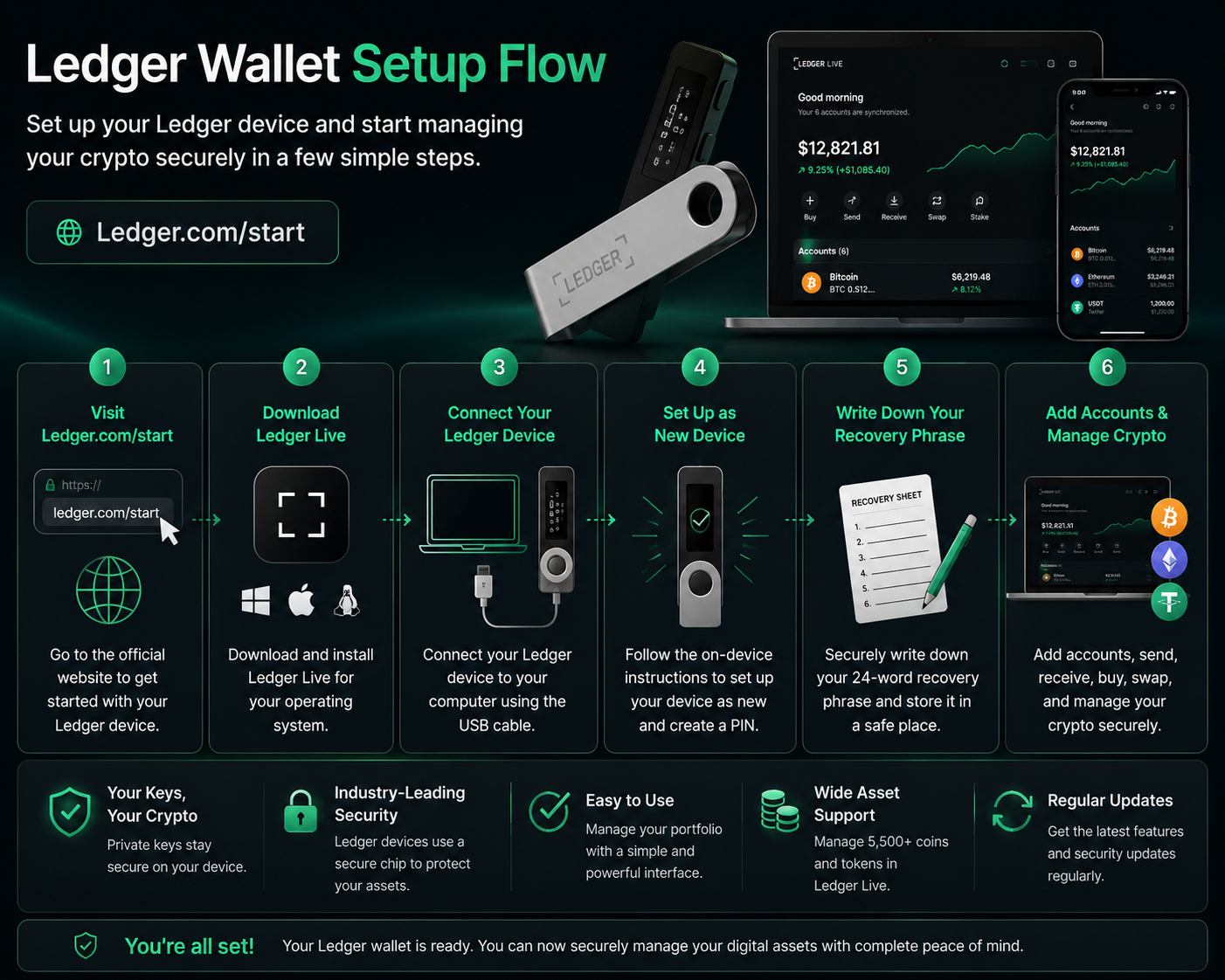
Wallet setup guide
Ledger.com/start: A Simple Guide to Reviewing Your Wallet Before Adding a New Account
Adding another account to a hardware wallet is usually straightforward, but taking a moment to review your existing setup first can prevent unnecessary confusion. As your crypto activity grows, a clear account structure makes it easier to identify assets, track transactions, and select the right account when you need it.
For users getting familiar with a Ledger hardware wallet, Ledger.com/start can provide a useful foundation for understanding the setup process.
Review Your Existing Accounts
Before creating another account, look through the accounts you already have. Check which assets are currently managed and whether an existing account already serves the purpose you need.
Creating unnecessary duplicate accounts can make your wallet harder to navigate later.
If you manage several accounts, consider giving each one a simple, recognizable name. Keep names focused on organization and avoid including sensitive information.
Confirm the Asset You Want to Add
Be clear about the cryptocurrency you intend to manage before creating another account.
Check the asset name carefully and confirm that it is supported by your Ledger setup. Do not rely on a similarly named token or an unfamiliar website to determine compatibility.
If you are uncertain, consult official Ledger documentation before continuing.
Understand the Network
Asset names alone are not always enough. Some cryptocurrencies and tokens can be associated with different networks, and selecting the wrong network can create transaction problems.
Before receiving or sending funds, understand which network is appropriate for your intended activity.
When in doubt, stop and verify the information through a trusted source instead of guessing.
Connect the Correct Ledger Device
If you own multiple hardware wallets, confirm that the correct device is connected before managing the new account.
Check the device and follow the instructions displayed by the official wallet software. When your hardware wallet asks you to approve or verify something, read the information carefully.
Avoid automatically approving prompts without understanding what they represent.
Give the New Account a Clear Purpose
A new account is easier to manage when you know why you created it.
You might use separate accounts for different assets or general organizational purposes. Whatever structure you choose, keep it consistent so that you can recognize accounts quickly later.
Simple organization becomes increasingly useful when transaction activity increases.
Review the Account Before Receiving Funds
Once the account is available, review its details before sharing a receiving address.
Confirm the asset, account, and network. If your Ledger device provides address-verification information, compare it carefully with the address you expect to use.
This extra step can help you catch errors before funds are transferred.
Keep Your Recovery Phrase Private
Adding an account should never require you to reveal your recovery phrase.
Never enter recovery words into a website, online form, email, support chat, or unfamiliar application. Be suspicious of anyone who says your recovery phrase is required to activate an account or complete Ledger.com/start.
Your recovery information should remain private and protected.
Review Your Setup Afterward
After adding an account, take a moment to review your overall wallet structure. Make sure the new account is easy to identify and that your existing accounts remain organized.
You can also review recent activity to confirm that everything looks familiar before starting a major transaction.
A short review now can make future wallet sessions easier.
Final Thoughts
Adding a new account is easier when you first understand your existing wallet structure. Review your accounts, confirm the asset and network, connect the correct Ledger device, and verify receiving information before moving funds.
Ledger.com/start can help users understand the initial wallet setup, while consistent organization and careful verification can make ongoing management more straightforward.